

- Retreat Days for Seminarians
Preparation for the service of sacred priesthood
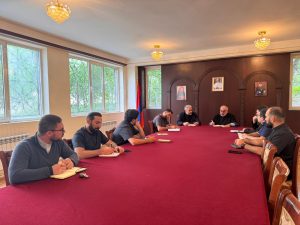
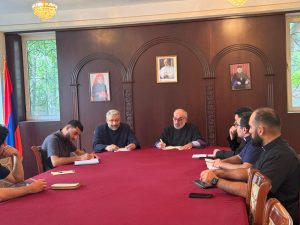
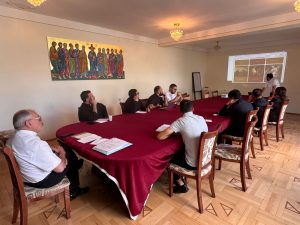
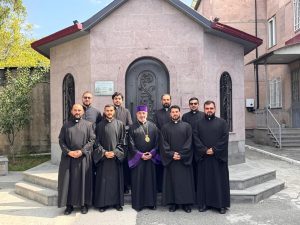
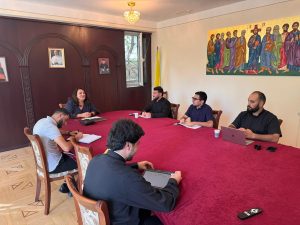
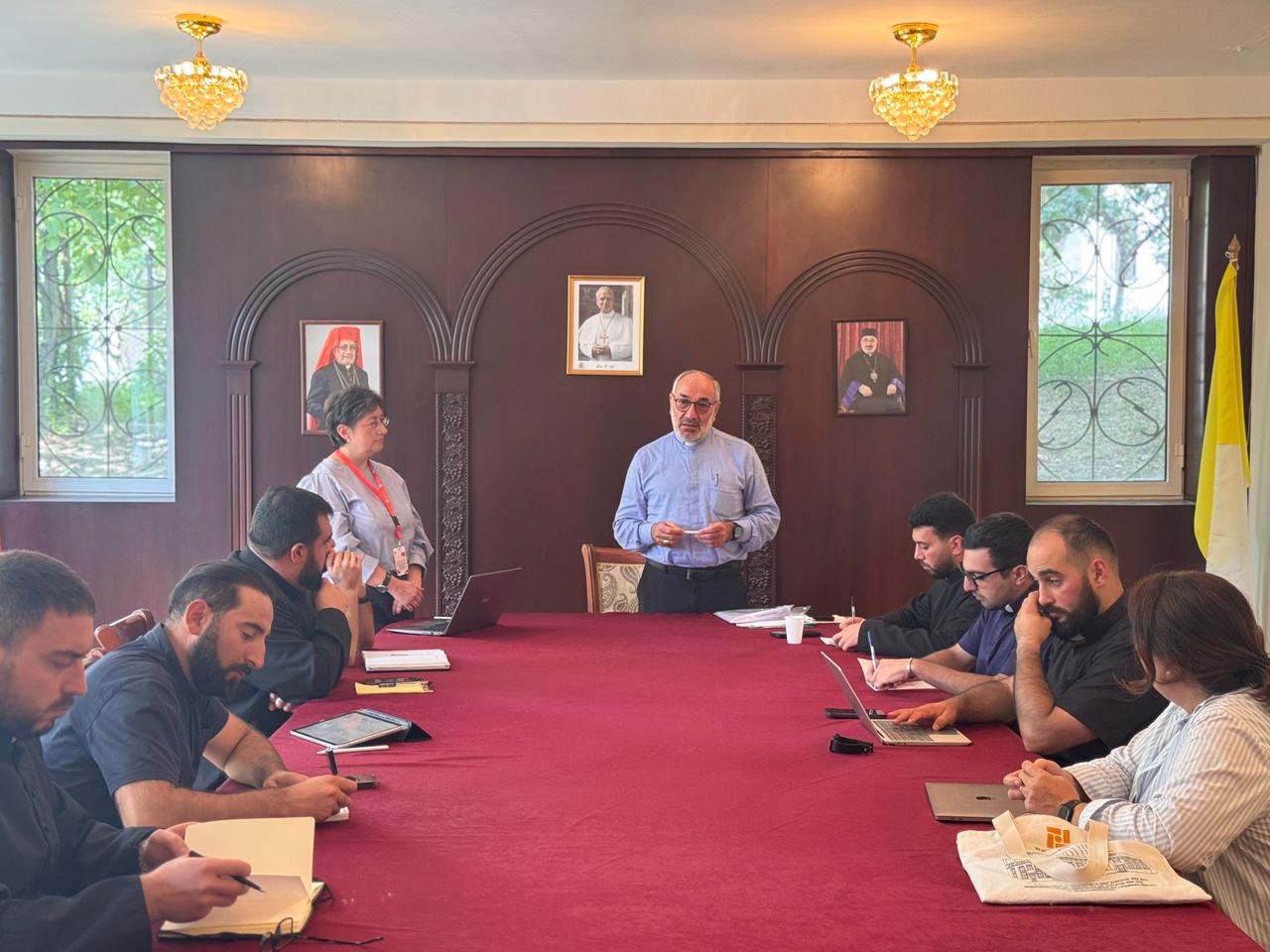
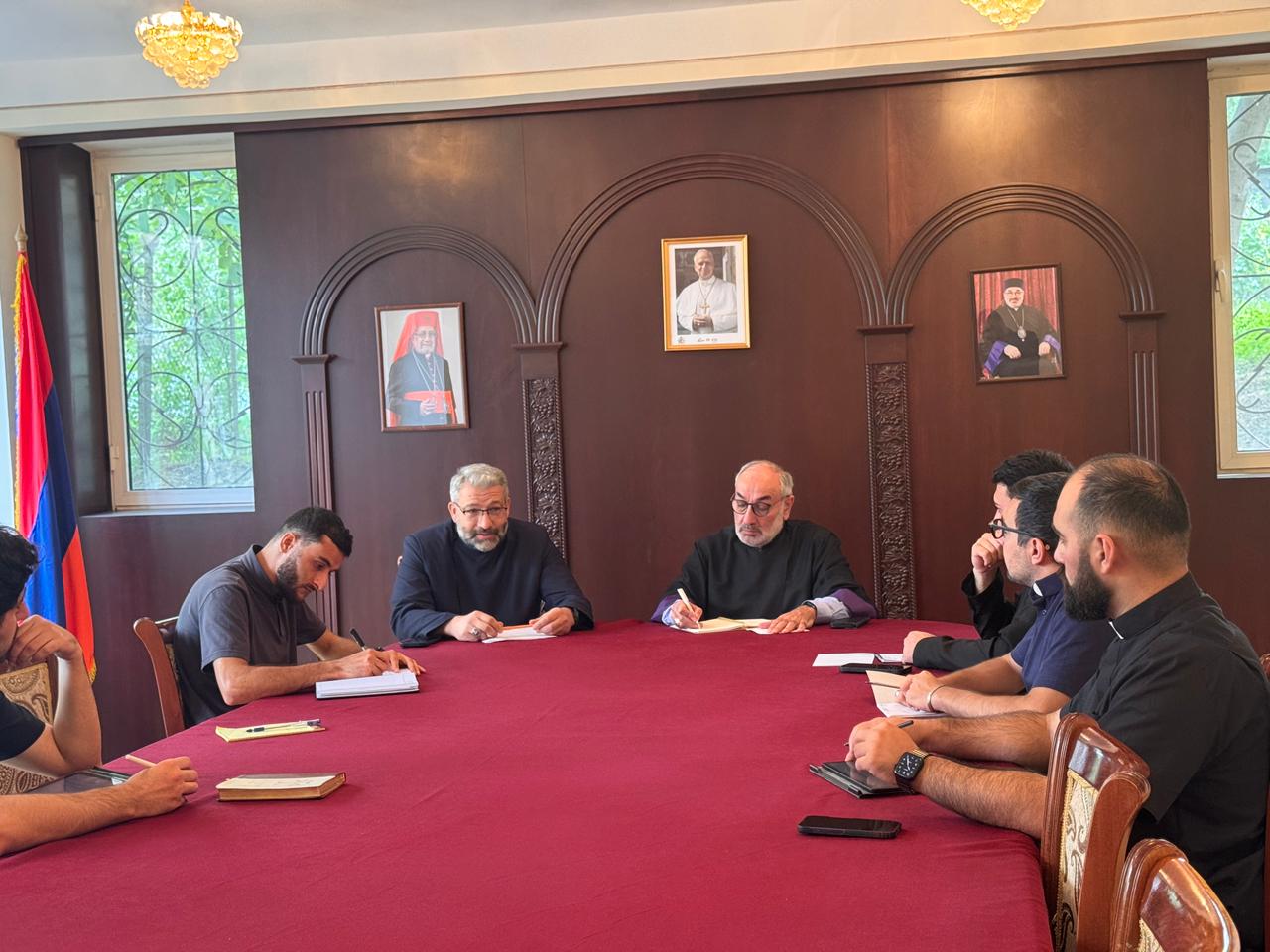
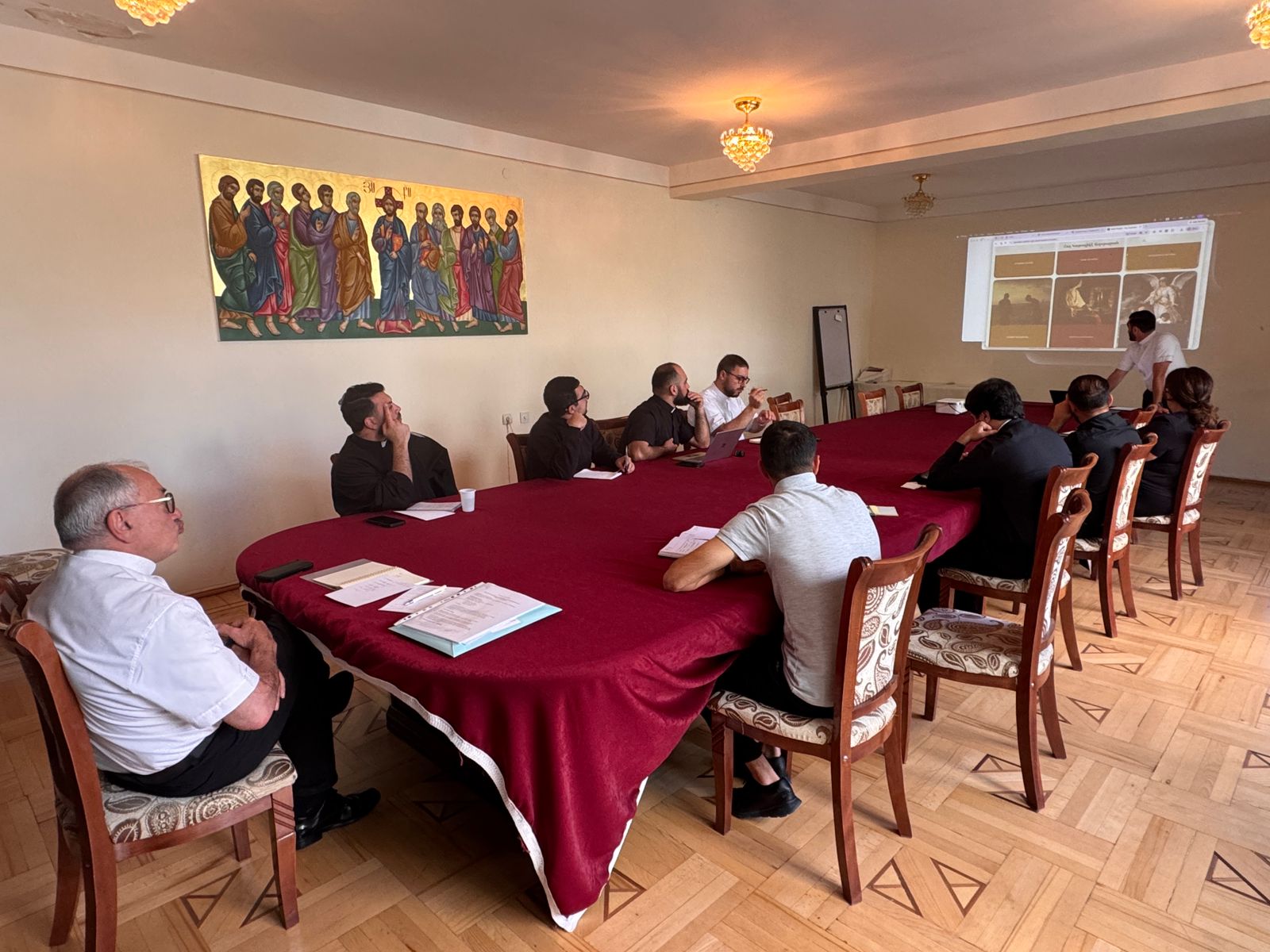
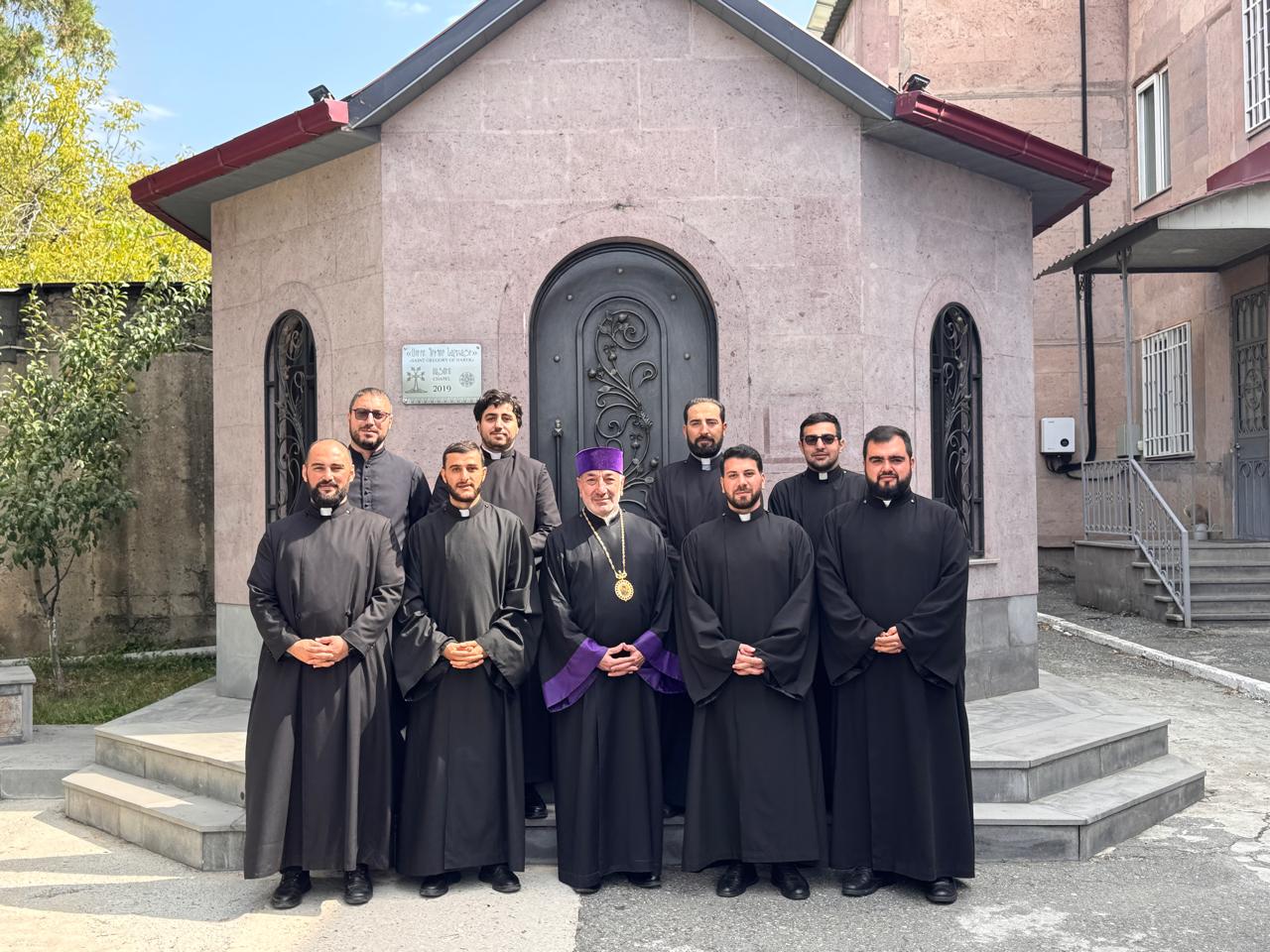
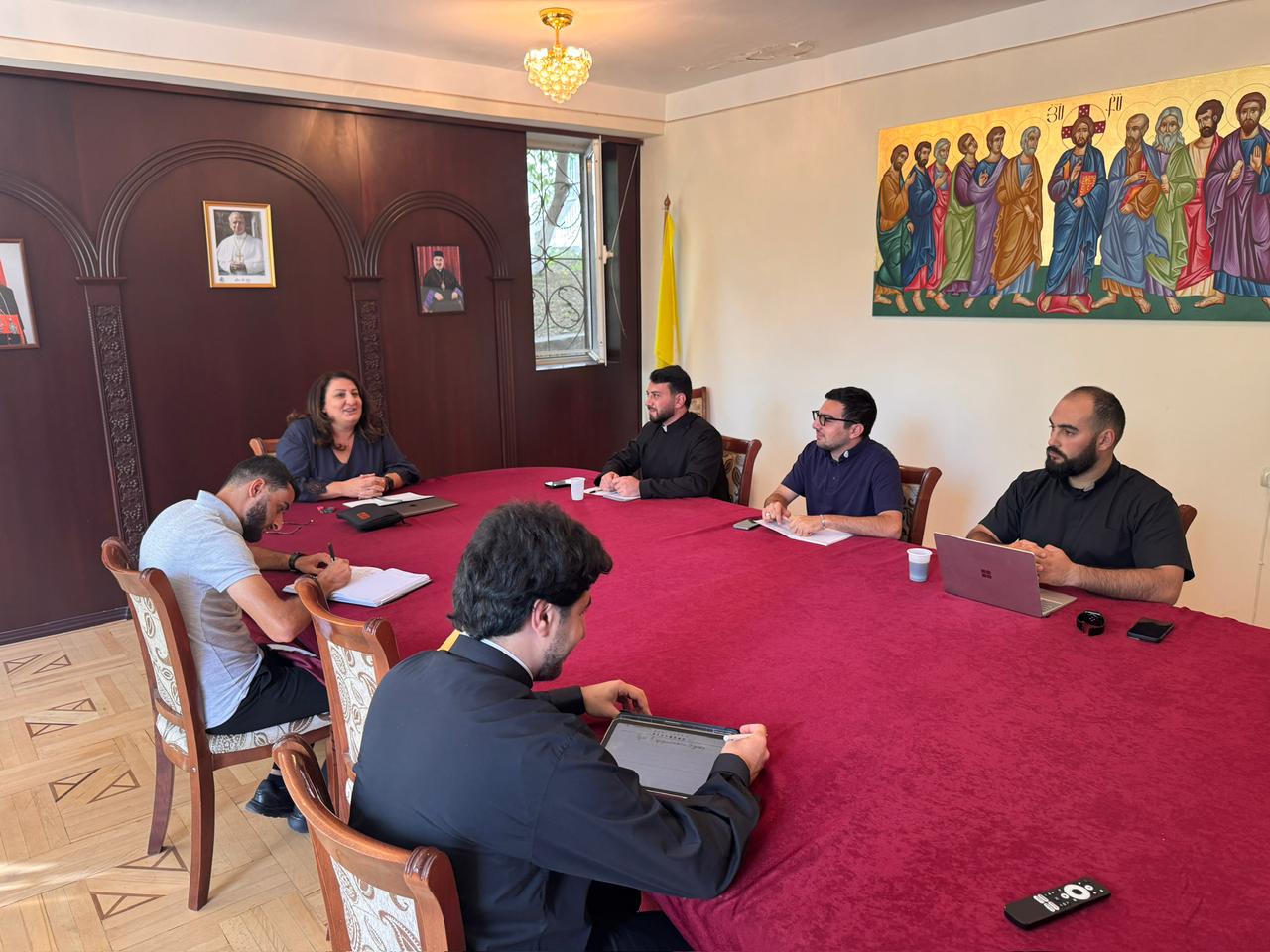
Starting with August 31 to September 5, 2026, Retreat days were held at the Ordinariate in Yerevan for the seminarians of the Ordinariate. Eight seminarians participated: Br. Ishkhan Poghosyan, Br. Vardan Haykyan, Br. Emmanuel Muradyan, Br. Simavon Mkrtchyan, Br. Joe Missisian, Br. Hovhannes Manukyan, and Br. Rafael Astoyan. During the four full days of spiritual Retreat, the topics for reflection and spiritual exercises were diverse and selected according to the logic of the contemporary mission challenges, which the Ordinariate faces currently.
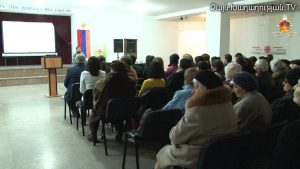
1.The topic of the first day was the Social Doctrine of the Church and its practical application in the mission of the Ordinariate, including the activities of the “Armenian Caritas” charitable organization. Very Rev. Fr. Nerses Galstyan, Deacon of the Armenian Catholic Communities of Armenia, spoke on the basic principles of the Social Doctrine. In his introductory remarks, he explained that “Social doctrine is not merely a theory; it is the expression of the Church’s living faith in society.” He focused on explaining the main principles of the Church’s social teaching, which are:
1.Respect for and protection of human dignity,
2.The common good,
3.Solidarity,
4.Subsidiarity—mutual assistance or strengthening one another to develop skills for acting independently,
5.participation.
Fr. Nerses drew attention to the need to develop human capacities and compared it with passive support. While passive material support is psychologically offensive to a person and makes people dependent, capacity building helps a person become independent and improve the quality of life through his/her own efforts. This very component should be the main direction of the Church’s social mission.
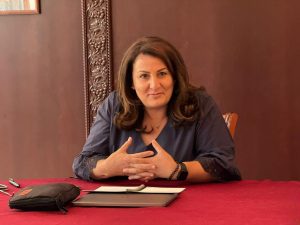
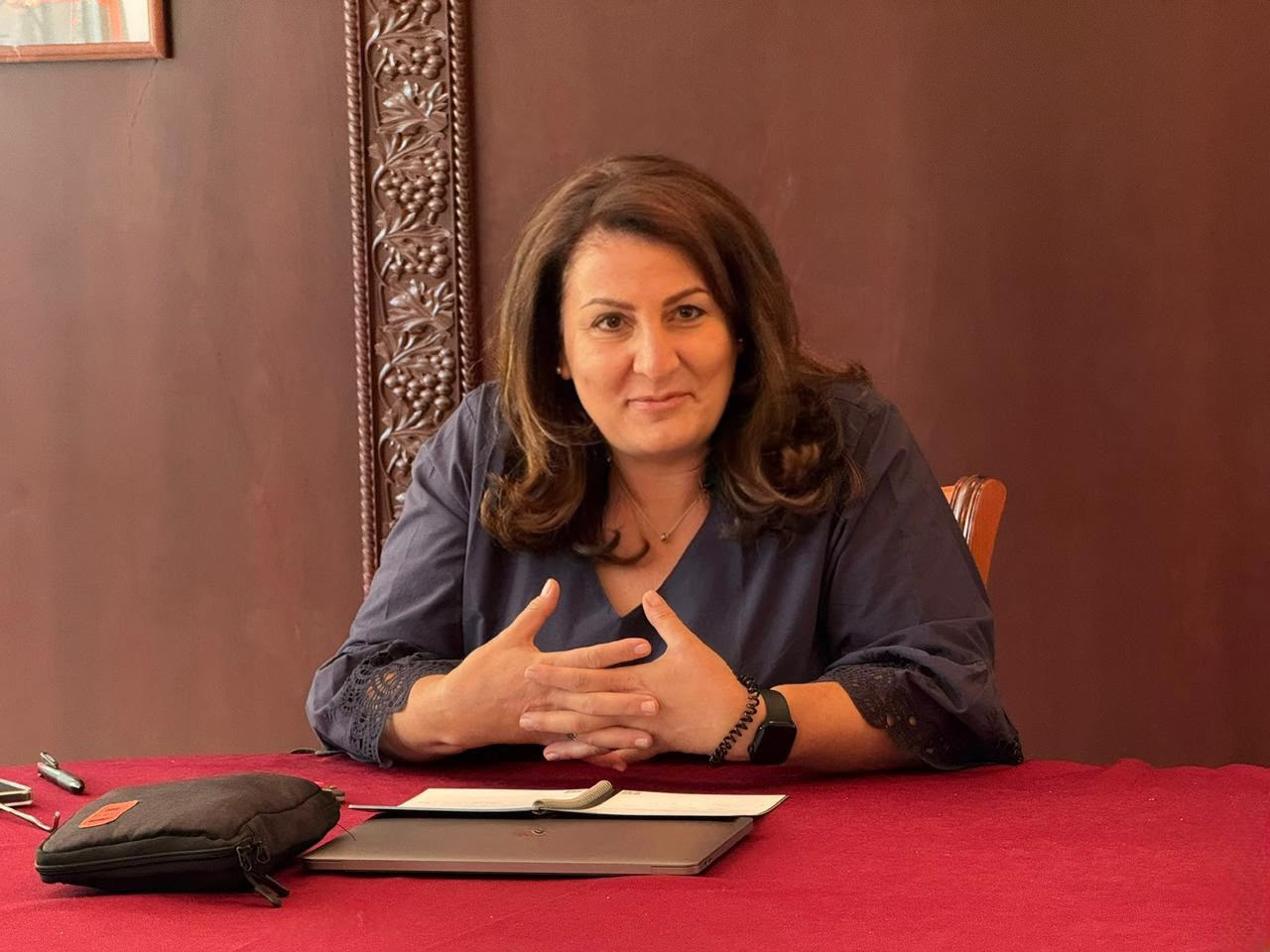
Mrs. Anahit Gevorgyan, Programs’ Manager at Armenian Caritas, with 29 years of work experience at Caritas, spoke with the seminarians about “Armenian Caritas” as a manifestation of the Catholic Church’s social mission. She explained what Caritas Internationalis is in general, when it was founded, and what mission it carries out, making special reference to the establishment and activities of “Armenian Caritas Benevolent NGO” in Armenia. Armenian Caritas implements various social projects in five provinces of Armenia and in Yerevan. Mrs. Gevorgyan talked about the founding of the head office in Gyumri in 1995, which became a reality under the auspices of the Armenian Catholic Church, through the efforts of the US organization CRS and a group of Armenian volunteers and staff. Mrs. Gevorgyan also spoke about the fundamental documents and principles for Caritas, which include papal encyclicals, the social teaching of the Catholic Church, and universal rules and policies for the international Caritas family.
2.The reflection topic for the second day was Synodality in the Armenian Catholic Church, presented by Dr. Mrs. Valentina Karakhanian, researcher-archivist at the Historical Archives of the Section for Evangelization “Propaganda Fide” of the Holy See and Postulator of the Dicastery for the Causes of Saints, invited by the Ordinary. According to her explanation, synodality is not just a teaching or a theoretical idea, but a lived experience of the Church, based on a shared journey, ecclesial communion, and the participation of all members. This principle emphasizes the need to make voices heard from parish communities, families, and dioceses so that decisions are not merely “imposed from above.” In this sense, a subtle tension is sometimes noticeable between the traditional top-down hierarchy of the Church and the idea of increasing horizontal participation of the faithful. The latter is most prominently expressed in Eastern and Armenian contexts, where a vertical management model is historically rooted. According to Mrs. Karakhanian, for the principle of synodality adopted by the supreme authority of the Catholic Church to become a reality, especially in the Armenian context, radical changes in mindset are necessary—changes that have already begun.
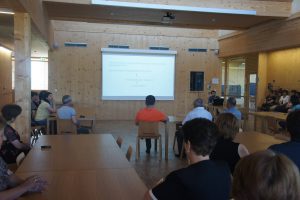
3.The topic for the third day’s reflection was “Self-directed Work, Artificial Intelligence, and Spiritual Life,” presented by Fr. Hayk Shahinyan, pastor of the Armenian Catholic community of Toronto, who is currently in Armenia. He spoke first about the importance of the personal growth of a seminarian and an ordained clergyman, which can be achieved through self-directed work. Only in this way can there be proactive, responsible spiritual leaders who possess the skills to respond correctly to challenges and find solutions. As an example, he cited the biblical figure of Nehemiah, who took the initiative to rebuild the ruined walls of Jerusalem. Fr. Hayk also spoke about applying artificial intelligence tools in spiritual ministry, which must be grounded in protecting human dignity and clarifying the motives and purpose of managing new technologies. “The question is not saying ‘yes’ or ‘no’ to the tool, but rather which city you are building with it—a new Babylon or the city where God and humanity dwell together,” said Fr. Hayk.
4.The presentation on the fourth day was dedicated to a deeper understanding and re-evaluation of the priestly vocation, conducted by H. E. Archbishop Kevork Noradounguian. His Excellency spoke about the spiritual, intellectual, and organizational path of Armenian Catholic clergy, analyzing the effectiveness and challenges of their activities at different stages of life. In a priest’s life, initial youthful enthusiasm and high productivity may decrease with age, compounded by material and financial concerns. A proper balance must be established between the spiritual and the material, always prioritizing spiritual ministry: “The ecclesial mission cannot be equated to risky financial or stock market investments; excessive materialization harms the spiritual vocation. A priest’s true success is not in material accumulation or stock market ‘tricks,’ but in blameless service, preservation of spiritual values, and the ability to dedicate oneself to the people,” emphasized His Excellency.
The seminarians were also given the opportunity to address their questions to His Excellency and receive answers concerning diocesan and monastic service differences, as well as the specific characteristics of the priestly service awaiting them amid the current challenges of the Ordinariate.
The lectures and discussions were accompanied by daily Holy Mass, Horarium (Divine Office), and the recitation of the Holy Rosary.
The seminarians are currently receiving their theological education in Rome and Warsaw; some have already completed their studies or are in their final year of Master’s or Licentiate degrees, working on their theses.
Assisted in preparation: Br. Simavon Mkrtchyan
Written by: Fr. Hovsep Galstyan
Chancellery of the Ordinariate for Armenian Catholics
 H. E. Archbishop Kevork Noradounguian Pays an Introductory Visit to the State Agency for Religious Affairs of the Government of Georgia
 Canonical Conditions, Impediments, and Preparation for the Sacrament of Matrimony in the Armenian Catholic Church
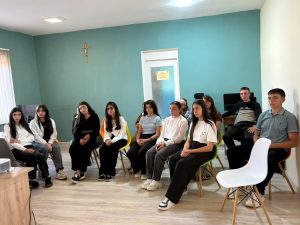 Youth Meeting in Ghazanchi Dedicated to the Feast of the Nativity of the Blessed Virgin Mary and the 105th Anniversary of the Legion of Mary
- SYNODALITY: Walking Together Toward Holiness
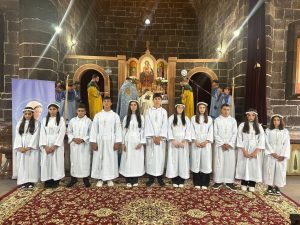 First Holy Communion at St. Gregory the Illuminator Church in Arevik
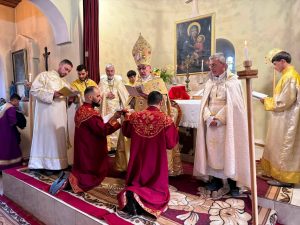 Conferral of the Subdiaconate Upon Two Seminarians in the Village of Bavra, Javakheti
Օրացույց